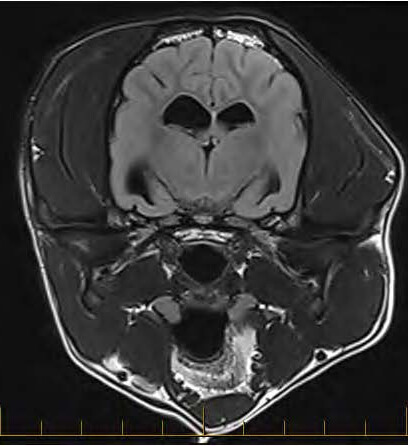
What exactly is an MRI?
MRI stands for Magnetic Resonance Imaging. Unlike X-rays or CT scans, which use radiation, an MRI uses powerful magnetic fields and radio waves to create highly detailed images of your pet’s internal structures.
Why is it the “Gold Standard”?
Currently, MRI is considered the best way to image the nervous system. It provides unparalleled detail of the:
- Brain (detecting tumors, inflammation, or strokes)
- Spinal Cord (identifying slipped discs or nerve compression)
- Surrounding Soft Tissues
What to Expect During the Procedure
The technology we use is the exact same high-level equipment used in human medicine. However, because the machine requires the patient to be perfectly still to capture clear images, pets must be under general anesthesia for the duration of the scan.
Safety First: Our Expert Team
We understand that anesthesia can be a point of concern for owners. To ensure the highest level of safety:
- Specialized Care: We work directly with our anesthesia team, including two board-certified anesthesiologists, to monitor your pet’s vitals every second they are under.
- Diagnostic Precision: Our board-certified radiologists collaborate during the scan to ensure we capture every necessary angle to facilitate a fast and accurate diagnosis.
Veterinary MRI: Frequently Asked Questions
1. How long does the MRI process take? While the actual scanning time usually takes between 45 to 90 minutes, your pet will be with us for a few hours. This allows time for pre-anesthetic blood work, the procedure itself, and a supervised recovery as they wake up from anesthesia.
2. Is MRI safe for my pet? Yes. Unlike X-rays or CT scans, an MRI uses no ionizing radiation. The primary “risk” is the anesthesia, which is why we have two board-certified anesthesiologists on-site to tailor the protocol to your pet’s specific health needs and monitor them every step of the way.
3. Why can’t my pet just stay still without anesthesia? Even the best-behaved pet can’t hold perfectly still for an hour inside a humming machine. The slightest movement—even deep breathing—can “blur” the magnetic images. Anesthesia ensures your pet is comfortable, pain-free, and perfectly still, so we get the clearest results the first time.
4. When will I get the results? Because we work with board-certified radiologists, your pet’s images are reviewed with expert precision. In most cases, we can provide a preliminary update shortly after the scan, with a detailed final report following within 24–48 hours.
Ready to take the next step in your pet’s care? At Friendship Hospital for Animals, we combine cutting-edge technology with a compassionate, team-based approach. If your veterinarian has recommended an MRI or if your pet is showing neurological symptoms, we are here to provide the clarity you need.
For more information on our Neurology team or to schedule a consultation visit our website
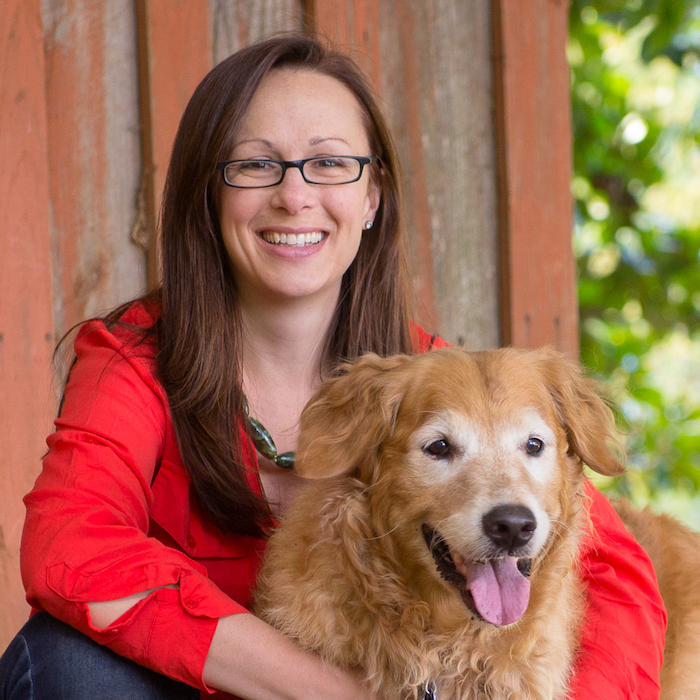
Dr. Allison Haley is a Diplomate of the American College of Veterinary Internal Medicine (Neurology). She graduated from the University of Maine with a Bachelor of Science. She attended veterinary school at Tufts University before completing a 1-year Small Animal internship at Friendship Hospital for Animals and a 1-year Specialty internship in Neurology at Gulf Coast Veterinary Specialists, followed by a 3-year neurology residency program at the University of Georgia. Dr. Haley returned to Friendship as part of the Neurology Specialty team in 2020.